
Zellige Tile vs Subway Tile: 6 Differences That Decide Your Choice
Zellige tile and subway tile solve different problems. If you want a backsplash that goes in fast, costs less, and looks identical on day one and ten years from now, subway tile is the safer pick every time. If you want a wall that catches light differently in the morning than at night, where no two tiles are quite identical, and you are willing to pay more and hire someone who has installed it before, zellige is worth it.
The short version: subway tile runs roughly $2 to $15 per square foot in materials and installs in a single day for most kitchens. Handmade zellige runs $18 to $22 per square foot in materials alone and needs an installer who understands dimensional variation, thin-set application, and sealing.
Below are the six differences that actually decide this choice for architects, contractors, and homeowners doing it themselves, followed by a straight verdict on which tile fits which project.
In this article
- What's the real difference between zellige and subway tile?
- Zellige tile vs subway tile: 6 differences at a glance
- How much more does zellige cost than subway tile?
- Is zellige tile harder to install than subway tile?
- Which tile holds up better over time?
- Which looks better, zellige or subway tile?
- Zellige vs subway tile: which should you choose?
- FAQ
What's the Real Difference Between Zellige and Subway Tile?
Zellige is a glazed terracotta tile hand-chiseled and kiln-fired by artisans in Fes, Morocco, using a process that has barely changed in centuries. Every tile comes out of the kiln slightly different in size, thickness, and glaze tone, which is the entire point. That variation is what gives a zellige wall its shifting, handmade texture.
Subway tile is a machine-made ceramic or porcelain tile, most often 3 by 6 inches, produced to a uniform tolerance. It was designed in the early 1900s for New York subway stations because it was cheap, durable, and easy to keep clean, and it has stayed the default backsplash choice for exactly those reasons ever since.
Zellige Tile vs Subway Tile: 6 Differences at a Glance
| Feature | Zellige Tile | Subway Tile |
|---|---|---|
| Cost per sq ft (materials) | $18 to $28, Handtile at $18 to $22 | $2 to $15 |
| Material and craft | Hand-chiseled, kiln-fired terracotta, each tile unique | Machine-made ceramic or porcelain, uniform |
| Installation | Needs an experienced installer, variable spacing | Straightforward, uniform spacing |
| Durability | Softer clay body, can chip more readily on edges | Porcelain especially holds up with minimal wear |
| Maintenance | pH-neutral cleaner, reseal unglazed finishes every 1 to 2 years | Wipe clean, virtually no upkeep |
| Style and look | Light-catching, variegated, a statement finish | Neutral, versatile, recedes into the design |
How Much More Does Zellige Cost Than Subway Tile?
Subway tile costs $2 to $15 per square foot in materials, or $7 to $35 per square foot installed once labor is included, according to contractor pricing data from HomeGuide. Ceramic subway tile sits at the low end of that range.
Handmade zellige costs more because every tile is cut and glazed by hand. Handtile's Zellige runs $18 to $22 per square foot, at the lower end of the $18 to $28 per square foot range typical of genuine handmade zellige. Add professional installation, generally recommended given the dimensional variation, and expect installed pricing well above standard ceramic subway tile.
For a typical 30 square foot kitchen backsplash, that works out to roughly $60 to $450 in subway tile materials versus $540 to $660 in Handtile zellige materials. The gap is real. It buys a wall nobody else has.

A warm, sandy neutral that works as a lower-cost entry point into handmade zellige without sacrificing the texture.
Is Zellige Tile Harder to Install Than Subway Tile?
Yes, and it is worth planning for rather than discovering mid-job. Subway tile's uniform dimensions let a tile setter work off a level line with consistent spacers. Zellige's tile-to-tile variation means the installer is adjusting bed thickness and joint width as they go, which is why most suppliers, Handtile included, recommend hiring an installer with zellige experience rather than treating it as a standard ceramic job.
The specs that make it work, drawn from standard zellige installation guidance: a high-quality medium-bed thin-set mortar, tiles buttered individually to avoid air pockets, a minimum 1/16 inch grout joint on walls (many installers run it edge to edge for the classic look), and a minimum 1/8 inch joint on floors. Unglazed tiles need a penetrating sealer before grouting and a protective wax after. None of this is difficult for an experienced tile setter. It is just different from a subway tile job, and skipping a step is the single biggest reason a zellige installation ends up looking uneven instead of intentional.
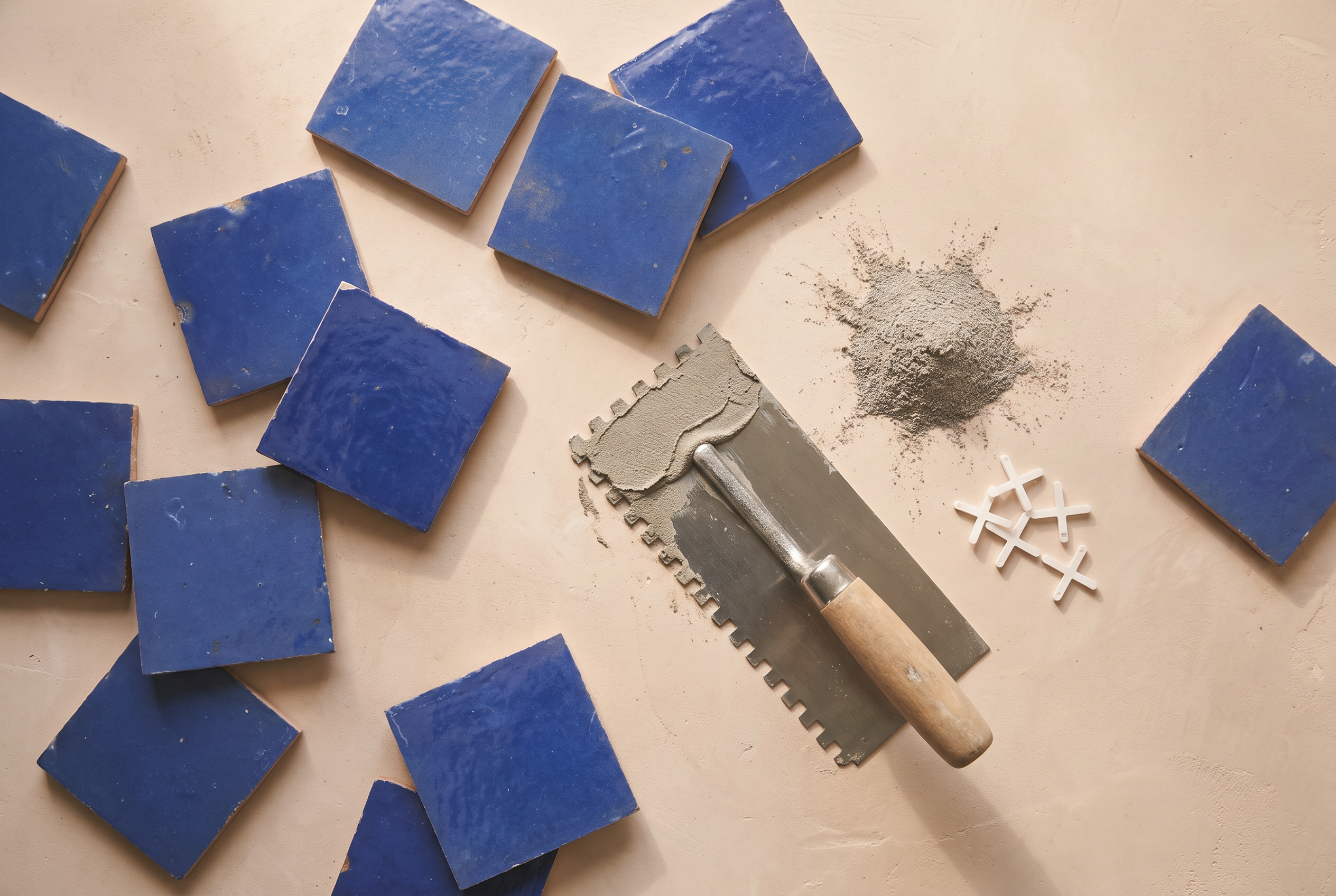

A glossy, statement finish popular with pro installers for feature walls and range backsplashes.
Which Tile Holds Up Better Over Time?
Both hold up well when installed correctly. Porcelain subway tile is close to maintenance-free: wipe it down and it looks the same in ten years. Zellige's softer, hand-fired clay body can chip more readily than a machine-made tile if something is dropped directly on an edge, and it needs a pH-neutral cleaner and, for unglazed finishes, resealing every one to two years.
In practice, this rarely changes the decision. A dropped cast iron pan will chip either tile. The real difference shows up in upkeep: subway tile asks nothing of you after installation, while zellige asks for an occasional reseal in exchange for a glaze that only gains character with age.
Which Looks Better, Zellige or Subway Tile?
This is genuinely subjective, but the two tiles are not competing for the same look. Subway tile is neutral by design. It recedes, fits almost any kitchen style, and lets everything else in the room do the talking.
Zellige does the opposite. The glaze pools unevenly across each tile, so the wall shifts in tone as the light in the room changes through the day, something a flat, uniform tile cannot do. Architects and designers reach for it specifically when a backsplash or feature wall needs to be the statement, not the backdrop.
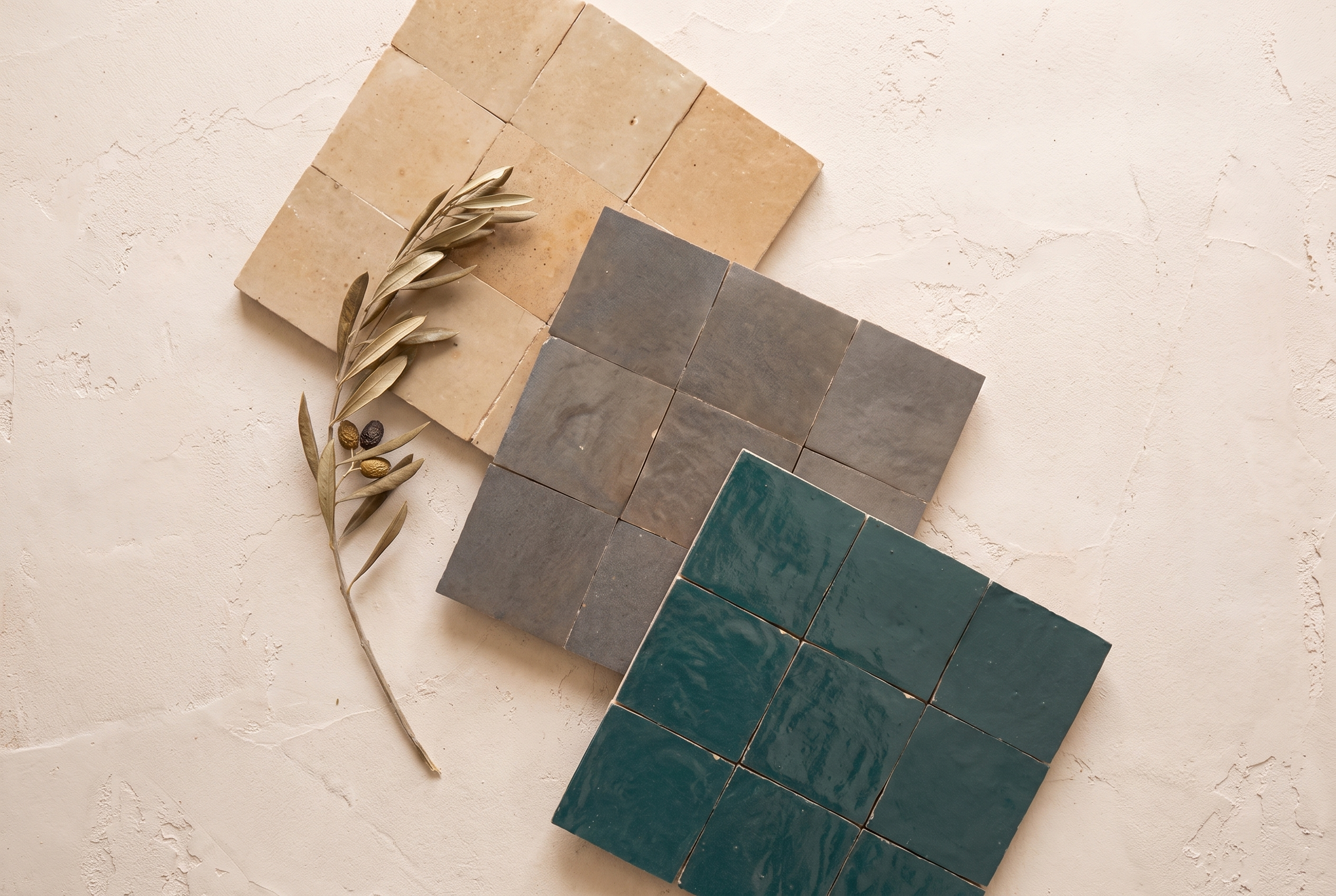

A quiet, refined neutral for anyone who wants zellige's texture without a bold color statement.

A deep, calm color for a shower niche or powder room that wants to feel considered, not loud.
Zellige vs Subway Tile: Which Should You Choose?
Choose subway tile when the project has a tight budget or timeline, the space is high-traffic and needs to stay nearly maintenance-free, or the tile needs to stay neutral so other finishes can lead.
Choose zellige when the wall is a focal point (a range wall, a powder room, a shower niche), the budget has room for $18 to $22 per square foot in materials plus an experienced installer, and the goal is a handmade material that photographs and ages differently than anything mass-produced.
Plenty of the best kitchens use both: subway tile on the workhorse walls, zellige on the one wall meant to be noticed.
Frequently Asked Questions
Is zellige tile more expensive than subway tile?
Yes. Subway tile runs $2 to $15 per square foot in materials, while genuine handmade zellige runs $18 to $28 per square foot, with Handtile priced at $18 to $22.
Can zellige tile be used on floors?
Yes, though it needs a wider grout joint than on walls, a minimum of 1/8 inch, both for durability and slip resistance, and it should be sealed for wet or high-traffic floors.
Does zellige tile need to be sealed?
Unglazed zellige does, both before grouting with a penetrating sealer and after with a protective wax, with resealing every one to two years in wet installations. Glazed zellige generally does not need sealing.
Is zellige tile durable enough for a kitchen backsplash?
Yes. It is a fired ceramic material rated for kitchen use, though its softer clay body can chip more easily than machine-made tile if struck directly on an edge, a risk any handmade material carries.
What size grout line should I use with zellige tile?
On walls, 1/16 inch or edge-to-edge for the traditional look. On floors, 1/8 inch minimum. Always grout zellige rather than dry-stacking it, since the grout protects the tile edges over time.
See Handtile Zellige in Your Space
Handmade in Fes, Morocco, from $18 to $22 per square foot. Browse every color and order samples before you commit to a wall.
Shop Zellige Tile →